Two trucks. Same dock. Same time. You've either seen it or you're going to.
One driver has to wait. The other is already backed in. Your warehouse guy is on the radio trying to figure out who confirmed what and when. Someone made a booking in the spreadsheet, someone else called the carrier directly, and now you've got a mess at 8 AM that was completely avoidable.
This happens constantly in warehouses that are still scheduling off shared Excel files, Outlook calendars, or a whiteboard at the dock door. And it's not because anyone is doing a bad job — it's because those tools weren't built to prevent it. There's no system stopping two people from booking the same slot at the same time.
If you're not sure your situation is bad enough to warrant fixing, this self-assessment is worth five minutes.
What It Actually Costs You
The obvious cost is time. Yours, the driver's, whoever has to sort it out on the floor. But that's just the start.
When a truck gets turned away and can't get back until the next day, you may miss a shipping deadline. That gets felt downstream by your customer, and they don't care whose fault the scheduling was.
Then there are detention fees. The carrier's truck sat around waiting because of your scheduling problem, and now you have a charge on the invoice. Those typically run $25 to $100 per hour past the grace period. They show up quietly on invoices but add up to serious money over a year. If you want to see what it's actually costing your operation, this calculator will give you a real number across labor, detention, and overtime.
And then there's the reputation side of it. Carriers talk. If your dock is known as a place where trucks show up and wait, or where bookings don't mean anything, you become a lower priority. Some will start padding their lead times. Others just quietly stop bidding your freight.
Your own staff takes a hit too. Half the morning goes to calls and emails sorting out who's coming when instead of actually running the dock. That's not a good use of anyone's day, and it wears people down.
The Actual Fix
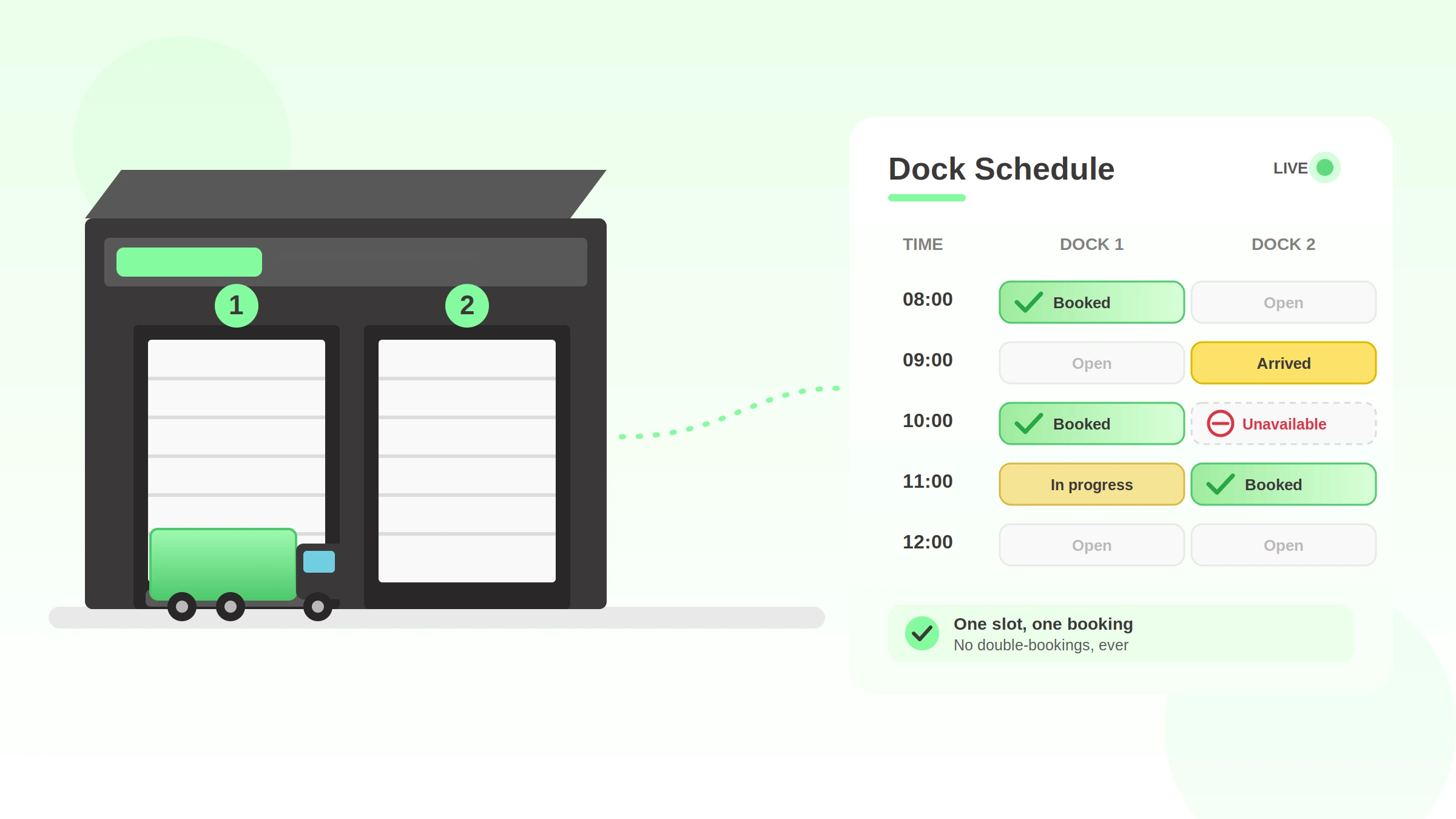
You need a system where a slot can only be booked once. Where whoever is trying to book can see in real time what's already taken. That's it. That's the whole fix.
With LoadingCalendar, you set up a booking portal and share one link with all your carriers and suppliers. They pick a date, they see what's open, they book a slot. If it's taken, it shows as unavailable. There's no way to double-book because the system physically won't allow it. Your team sees the same calendar, live, no refresh needed.
Nobody is working off yesterday's version of the spreadsheet. Nobody is confirming slots over the phone that are already gone. If you want to understand what dock scheduling software actually covers versus bigger systems like yard management, this comparison explains the difference clearly. And if you want to see how the main options on the market stack up against each other, this roundup covers them side by side.
Getting Carriers to Actually Use It
The software part is the easy part. Getting carriers to stop calling you and just book online — that takes a few weeks.
The approach that works is being blunt about it. Tell your carriers that starting from a specific date, trucks without a prior booking won't get loaded. Then hold to that. When a driver shows up without a booking in the first couple of weeks, you tell them you can fit them in at 2 PM or tomorrow morning. You don't squeeze them in just because the dock happens to be free. If you reward showing up unannounced, you've already lost.
Most carriers come around within 2 to 3 weeks. Once they realize they can book a slot at 9 PM without calling anyone, most of them actually prefer it. There's a full walkthrough of how to run this rollout in the warehouse appointment system setup guide.
One thing that helps when you're telling carriers about the change: LoadingCalendar costs them nothing. No account, no subscription, no fee of any kind on their end. They click a link, fill in a few details, pick a slot. That's it. Takes the wind out of the "we won't use it" objection pretty quickly.
You Don't Need a Big System for This
This isn't a WMS implementation. There's no IT project, no training sessions, no consultant coming in to configure anything. You set up your docks, set your opening hours, share your link. Most people are running the same day they sign up.
The reason this problem sticks around in so many warehouses is that the obvious solutions — a proper WMS or TMS — feel like overkill for a scheduling problem. They're expensive, they take months to implement, and they do a hundred things you don't need. Dock scheduling software is a much narrower tool, built specifically for this problem. If you're already running a TMS and want it connected, the integration with Cargoson is already built. And if you want to see how a real operation made the switch, Cleveron's story is a good read.
Double-booking is a coordination problem. The spreadsheet isn't going to fix itself. But it's also not a complicated thing to solve once you stop trying to make the outdated tool work.
You might also like
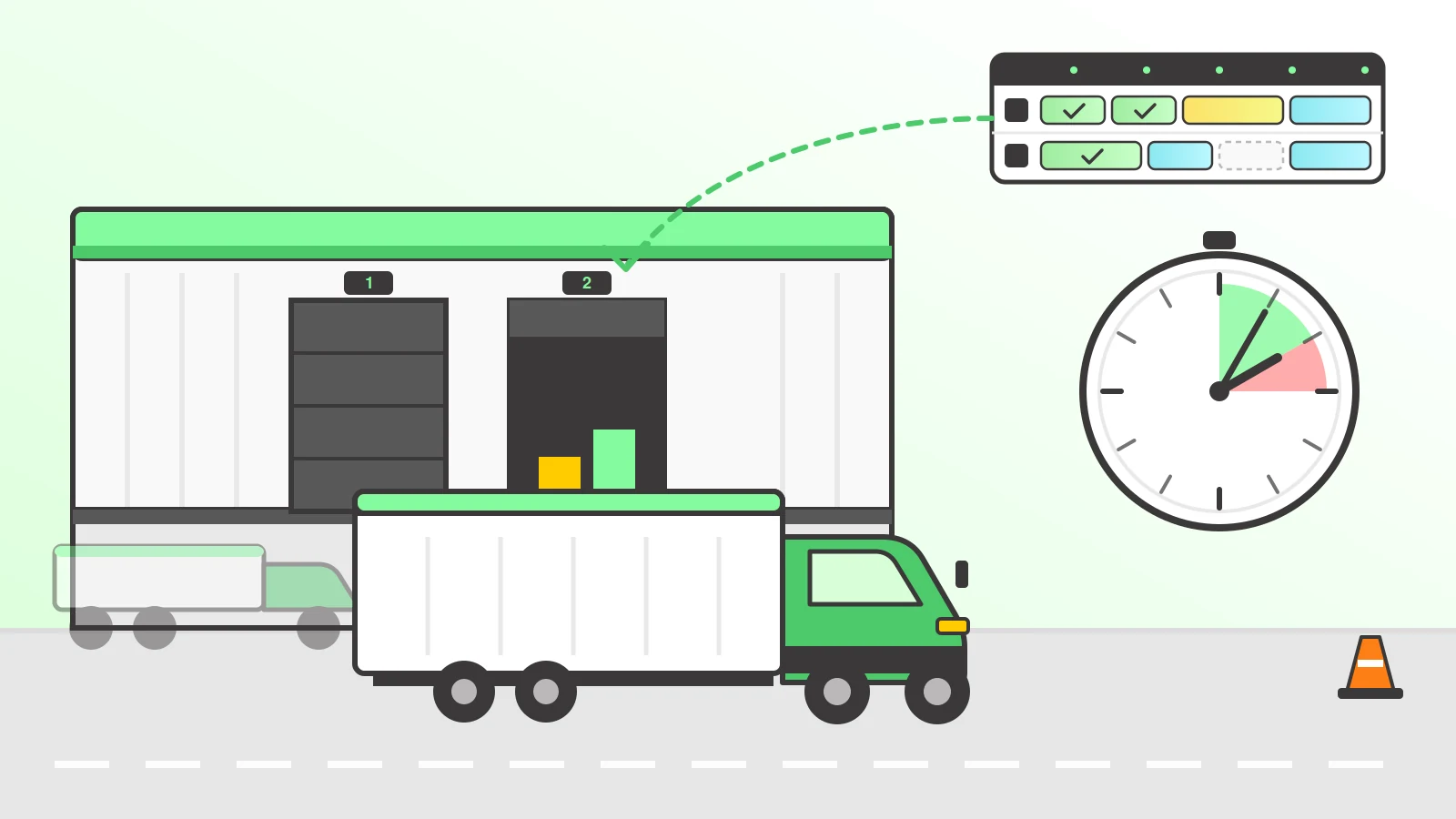
How to reduce detention fees: put every truck on an appointment, match slot lengths to real loading times, and log arrival, dock-in and departure automatically.
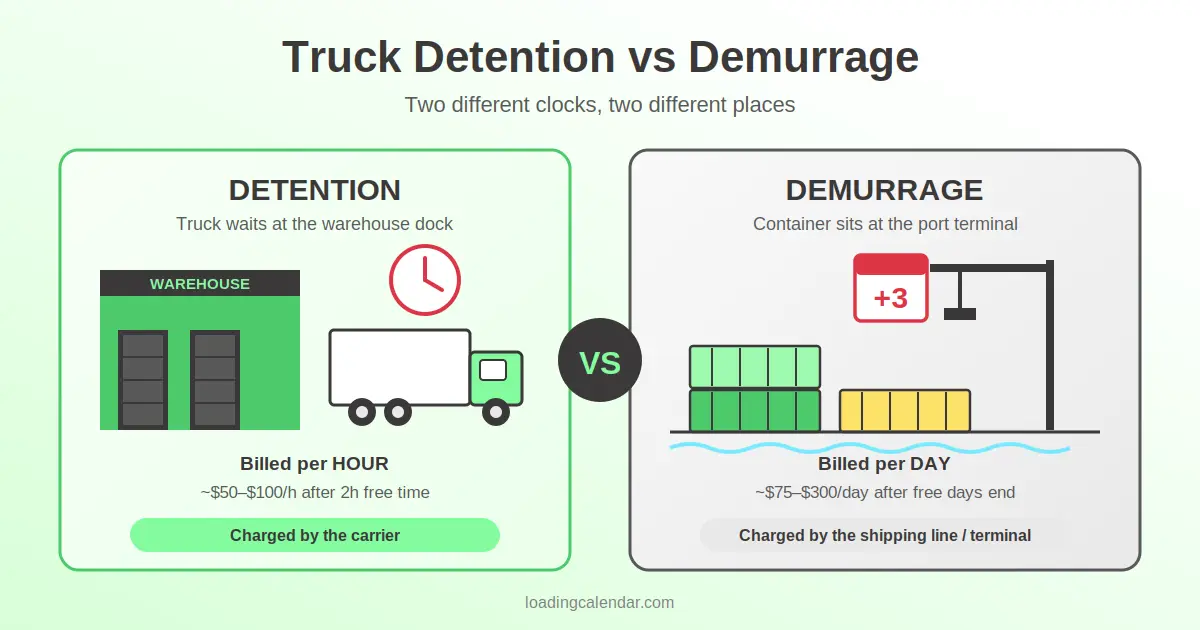
Truck detention is the fee carriers charge when drivers wait past free time — typically $50–$100/hour after 2 hours. Demurrage is a daily port charge. Here's the difference, who pays, and how to avoid both.
![How Much Does Dock Scheduling Software Cost? [2026 Pricing Comparison]](/assets/blog/dock_scheduling_software_cost-8463ea4974f5bc10aa183dee2e5f8c8139acfed8804ad040f32985c7e3080efb.webp "How Much Does Dock Scheduling Software Cost? [2026 Pricing Comparison]")
How much does dock scheduling software cost in 2026? Every vendor's price with sources — from $0.55 per booking to $15,000+ per year, compared side by side.
Ready for simpler warehouse scheduling?
Join warehouse teams across the world that replaced spreadsheets and phone calls with simple dock appointment scheduling software.
Start My Free Trial 14-day free trial · No credit card required · Cancel anytime